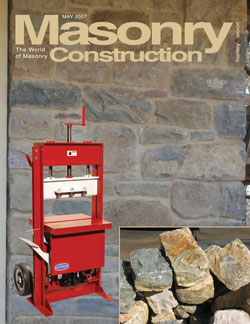
A Harvard-educated geologist building a luxury home in Mendham, NJ discovered Block Shear online and used its pneumatic splitter to dramatically speed up the splitting of 320 tons of quartzite, one of the hardest stones to work.
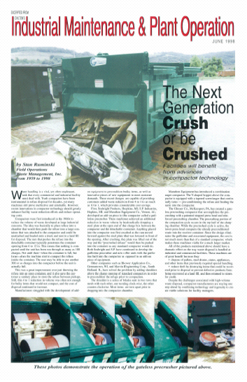
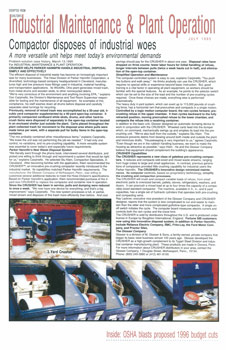
An industry overview of advances in compactor technology, featuring the Glosser Company’s patented gateless precrushing compactor and how next-generation machines were transforming waste disposal across industrial and commercial facilities.
Dynamic Business, Voice of Pennsylvania Businesses
Alternatives to Bankruptcy-Liquidation
Ray Lackner’s in-depth article on crisis and turnaround management, covering how innovative repositioning and restructuring strategies can help distressed companies avoid bankruptcy liquidation.
New Waste Management System Keeps Engine-Parts Plant Purring
A case study of Textron’s turbine engine plant in Danville, PA, which adopted the Glosser CRUSHER to handle complex mixed-waste streams, achieve EPA compliance, and recoup its capital investment within 13 months.
How Parker Hannifin’s Wickliffe, Ohio plant replaced a 30-year-old open-top container system with the Glosser CRUSHER, cutting trash pulls from twice weekly to once a week and handling a far wider range of industrial waste streams.
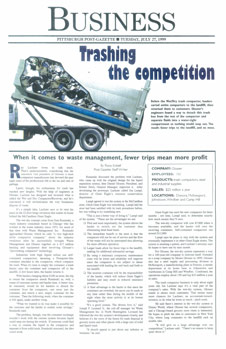
Pittsburgh’s daily newspaper covers Lackner’s innovative wet-and-dry compactor system being field-tested at Giant Eagle stores. Fewer hauling trips, lower costs, more profit for the retailer.
July 1999
PDF Coming Soon
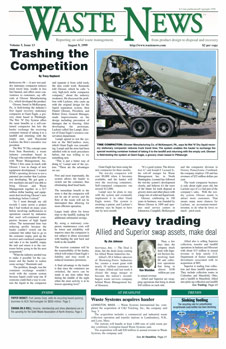
Waste News, A Crain Publication
Trashing the Competition
Trade press coverage of Lackner’s wet-and-dry stationary compactor for the Giant Eagle grocery chain in Pittsburgh, reducing truck travel time and hauling costs through a novel liquid-separation design.
Ray Lackner on turnaround strategies for distressed businesses, written for the sales and manufacturer’s representative industry.
January 2004
PDF Coming Soon
The Pittsburgh Press
Squeeze Play
An early feature on Lackner’s work developing industrial compactor technology in the Pittsburgh region, published in the year of the Pittsburgh Press’s final edition.
January 1992
PDF Coming Soon
About Raymond Lackner
Raymond F. Lackner, CPA, President
Raymond F. Lackner has 30 years of hands-on management experience running a steel plate processing company, supplying component parts to industry and processing stainless steel and tool steel for the specialty steel industry. In 1990, Mr. Lackner founded a successful subsidiary company where he designed, marketed, and sold a new line of patent-approved industrial refuse compactors.
His industrial experience includes supervision of manufacturing activities, marketing, sales, research and development, licensing agreements, sale and acquisition of companies, and general responsibility for financial affairs, including banking, insurance, labor relations, accounting, and information technology. He also has extensive experience in industrial pump and motor distribution, steel warehousing, and ferrous and non-ferrous scrap processing.
Before establishing Consulting For Results LLC, Mr. Lackner served as Executive Vice President and General Manager of the Glosser Company, Controller/Treasurer of Tygart Industries, and Assistant Controller of National Steel Corporation’s Steel Service Division.
Mr. Lackner holds a BS in Accounting from the University of Maryland, College Park, and completed his apprenticeship at Alexander Grant & Company, Certified Public Accountants (now Grant Thornton), Pittsburgh, PA office.
Professional References
Mark Unatin
Attorney, Buchanan Ingersoll
I have enjoyed working with Ray Lackner on various matters over the past several years including reorganizations, SBA loans, corporate acquisitions and patent matters. In most cases he developed, negotiated and implemented these transactions, always with defined priorities and high professional standards. His can-do pragmatic methods, in sometimes emotional settings, focused on finding common ground and closing the deal.
Pittsburgh, PA • 412-551-1867
Bernhard "Bud" Schaffler
Federal Bankruptcy Judge (Retired)
I contacted Alex Wolf Crisis Management, Montreal Canada, "alex-wolf.com" seeking his help to research for a class action suite I want to file against a Pittsburgh bank. Alex's associate in Pittsburgh was Ray Lackner. As it turned out I worked with Ray and his patent attorney Lawrence "Larry" Zurawsky on several occasions and I welcome assistance on this project.
Manahawkin, NJ • 609-709-3447
Ed Marchok
Manager of IT, Latrobe Steel
I consulted with Ray Lackner as he Developed of a proprietary "enterprise management" software, integrating order entry, production scheduling, purchasing, reserve inventories, work orders, bills of material, shop drawings, and personnel work assignments . This system tracked coordinated and tracked production through final assembly, shipping and invoicing -- resulting in a reduction of inventories, and of direct and indirect labor; also resulting in a dramatic improvement of quality, reduced lead times and increased profitability. I also worked with Ray on an integrated G/L, A/R ,A/P and Profit and Loss and Balance Sheet system that included Sales
Latrobe, PA • 724-539-8755
Chris Hutzell
Former Executive, Hesco International
After retiring from Hesco International in 1992 I worked on a consulting basis with Ray Lackner. I participated with him, as he as primary inventor and R&D; program manager / champion---- developed a comprehensive line of industrial equipment. He marketed and sold this unique class of patent approved refuse compactor and on that basis built a national company.
Cottondale, FL • 850-352-4498
Dan Besideck
National Engineering Sales, Odgen Steel Corporation
As national engineering sales of Odgen Steel Corporation I worked with Mr. Lackner in the development of steel plate fabrications to be used as substitutes for gray iron and steel castings. We jointly designed component parts for the mobile crane, crane ,tractor and forklift industries. The customers included Hyster, Yale, Grove Mfg., JLG and John Deer Company.
Chicago, IL • 219-921-6828
Stan Rumininski
Manager Field Operations, Waste Management, Inc. (1959-1988)
I approached Ray Lackner who ran a very high tech compactor company about an industry weakness. I asked him to develop a new system to be used in the collection of grocery story waste. The design for a liquid separation compactor was quickly developed and the new system solved a 40 year old inefficiency. The new compactor allows the hauler to switch out the container thus eliminating dead hauls.
Chicago, IL • 630-789-3433
U.S. Patents
Raymond Lackner holds six U.S. patents spanning nearly two decades of invention across two distinct industries. Four of his patents, filed between 1991 and 1998, represent a progressive body of work in industrial refuse compaction developed during his years at the Glosser Company in McKeesport, PA. Starting with the foundational integrated precompacting design in 1993, each successive patent refined the core technology: improving the ram mechanism, solving jamming problems, and ultimately adding liquid disposal capability to handle wet waste streams that conventional compactors could not. These patents were licensed and put into production, with the CRUSHER system adopted by Fortune 500 manufacturers including Parker Hannifin, Textron, Frito-Lay, and Ford Motor Company.
His fifth patent covers a racheted nut assembly that solves the practical problem of tightening fasteners in confined spaces where a standard wrench cannot complete a full rotation. His sixth and most recent patent, granted in 2010, is the one most directly relevant to Block Shear: the apparatus and method for splitting masonry materials that became the engineering foundation for the Block Shear stone splitter line sold to masons and landscapers worldwide.
Patent No. US 6,067,900
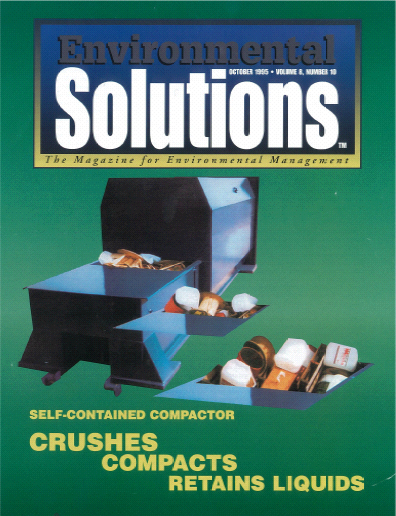
Trash Compactor with Liquid Disposal
A compactor with a separable storage container that isolates liquid from compacted solid waste into a dedicated reservoir. Solids and liquid are emptied separately at the disposal site, eliminating the cost of hauling liquid by weight.
Granted May 30, 2000. Glosser Manufacturing Co., Inc.
Apparatus and Method for Splitting Masonry Materials
The foundational patent behind the Block Shear stone splitter: a frame with a vertically moveable table and paired upper and lower blades that apply precise, controlled force to split stone and masonry cleanly without hammers or chisels.
A ratcheted nut assembly that allows a nut to be fully tightened onto a bolt in confined spaces where a standard wrench cannot complete a full rotation, solving a common problem in industrial equipment assembly and maintenance.
An improved two-part ram compactor that simultaneously precompacts trash in an auxiliary chamber while compacting already-precompacted material in the main chamber, with a latch system that prevents jamming between the two ram parts.
Granted October 6, 1998. Glosser Manufacturing Co.
A single-ram compactor that handles both precompaction and final compaction stages in sequence, an early iteration of the integrated two-stage compacting system that became the foundation for subsequent patents.
The original integrated precompacting design: a single ram that simultaneously precompacts trash in an auxiliary chamber and compacts precompacted material in the main storage chamber, dramatically improving efficiency over conventional systems.
Splitting stones requires the use of specialized tools such as stone splitters or chisels. Position the tool along the natural grain of the stone, apply steady pressure, and strike with a hammer to create a clean break.
How to split natural stone?
Splitting natural stone involves using specialized tools like hydraulic splitters or chisels. Start by marking the desired line, then apply steady pressure with the splitter along the line to create a clean break.
How to split stone?
Splitting stone requires the right technique and tools. Use a stone splitter or a chisel and hammer to create a pre-defined crack, then apply steady pressure or force to break the stone along the line.
How to split stone with a chisel?
Splitting stone with a chisel involves using a pointed chisel to create a series of shallow grooves along the desired split line. Once the grooves are established, apply force with a hammer on the chisel to cleave the stone along the line.
How do you split stone?
The process of splitting stone involves using specialized tools such as stone splitters or chisels and hammers. These tools create fractures in the stone along predetermined lines, allowing for precise and clean splits.
What tools are best for splitting stones?
The best tools for splitting stones include hydraulic stone splitters, manual stone chisels, and pneumatic rock drills. These tools efficiently break down large stones into manageable pieces for masonry work.
Can you split stones without heavy machinery?
Stones can indeed be split without heavy machinery. Manual stone splitting tools, such as chisels and wedges, or specialized stone splitters, are effective alternatives for smaller projects, allowing for precision and control in the splitting process.
How to ensure safety when splitting stone?
Ensuring safety when splitting stone involves using appropriate personal protective equipment (PPE) such as safety goggles, gloves, and steel-toed boots, while maintaining a clear workspace and following manufacturer instructions for tools. Always be aware of your surroundings and avoid distractions.
What techniques improve stone splitting efficiency?
Techniques that improve stone splitting efficiency include using high-quality, sharp tools, ensuring proper alignment, applying consistent pressure, and selecting the right type of splitter for the stone material. Regular maintenance of tools also enhances performance.
How to choose the right stone splitter?
Choosing the right stone splitter involves considering the type of stone you will be working with, the thickness of the material, and the frequency of use. Evaluate different models based on these factors to select the best fit for your needs.
What types of stone can be split?
The types of stone that can be split include granite, limestone, slate, marble, and concrete. Our high-quality stone splitting tools are designed to effectively handle these materials, making them ideal for stone masons.
How do you prepare stones for splitting?
Preparing stones for splitting involves selecting the right stone and ensuring it's free of dirt and debris. Mark the desired split line, then drill holes along this line to facilitate a clean break when using a stone splitter.
What is the best angle for splitting stones?
The best angle for splitting stones typically ranges between 20 to 30 degrees. This angle allows for effective leverage and ensures a clean, controlled split, optimizing the performance of your stone splitting tools.
How to maintain a hydraulic stone splitter?
Maintaining a hydraulic stone splitter involves regularly checking hydraulic fluid levels, inspecting hoses and fittings for leaks, and ensuring all moving parts are lubricated. Additionally, clean the splitter after use to prevent debris buildup.
What are common mistakes in stone splitting?
Common mistakes in stone splitting include using improper tools, failing to understand the natural grain of the stone, applying uneven pressure, and neglecting safety precautions. These errors can lead to ineffective splitting and potential injury.
How to troubleshoot a hydraulic stone splitter?
Troubleshooting a hydraulic stone splitter involves checking for hydraulic fluid levels, inspecting hoses for leaks, and ensuring the pump operates correctly. If issues persist, consult the manual or contact customer support for further assistance.
What are the benefits of splitting natural stone?
The benefits of splitting natural stone include enhanced precision in shaping, reduced material waste, and the ability to create uniform sizes for various construction and landscaping projects, ultimately contributing to higher efficiency and cost-effectiveness in stone work.
How to achieve clean splits in stones?
Achieving clean splits in stones involves using the right tools and techniques. Employ high-quality stone splitters and ensure proper alignment and pressure application for precise cuts, minimizing friction and preventing damage to the stone.
Can you split stones in cold weather?
You can split stones in cold weather, but it's essential to be cautious. Low temperatures can make some stones more brittle and challenging to split, so adjusting your technique and tools may be necessary for optimal results.
How do you measure stone for splitting?
Measuring stone for splitting involves determining its dimensions and thickness. Use a tape measure to find the length, width, and height, ensuring accuracy to select the appropriate splitter and achieve optimal results.
What is the best time to split stones?
The best time to split stones is during cooler parts of the day, such as early morning or late afternoon, when temperatures are lower. This helps prevent the stones from becoming too brittle or difficult to work with.
How to split irregular-shaped stones?
Splitting irregular-shaped stones requires careful planning and the right tools. Begin by identifying the stone's natural fracture lines, then utilize a high-quality stone splitter to apply consistent pressure along those lines for a clean break.
How to use a chisel effectively for splitting?
Using a chisel effectively for splitting involves positioning it at a sharp angle on the stone and striking it with a hammer to create a line of weakness, then continuing along that line to split the stone cleanly.
What safety gear is essential for stone splitting?
Essential safety gear for stone splitting includes safety goggles to protect your eyes, sturdy gloves for hand protection, hearing protection against loud equipment noise, and steel-toe boots to safeguard your feet from falling stones.
How to split large boulders effectively?
Splitting large boulders effectively requires the use of specialized stone splitting tools like hydraulic splitters or chisels and wedges. Start by scoring a line around the boulder, then strategically apply force to split it along the scored line.
What materials are often used for stone splitters?
The materials often used for stone splitters include high-strength steel for durability and reliability, as well as specialized alloys designed to withstand the stress of splitting hard stones. These materials ensure optimal performance and longevity in stone masonry tasks.
What is the history of stone splitting tools?
The history of stone splitting tools dates back to ancient civilizations, where early craftsmen used manual methods like wedges and hammers to shape stone. Over time, advancements led to more sophisticated tools, enhancing efficiency and precision in stone masonry.
How can stone splitting techniques vary by region?
Stone splitting techniques can vary by region due to factors like local geology, available tools, and cultural practices. Each area may have developed unique methods suited to the specific types of stone and environmental conditions.
What are environmental considerations for stone splitting?
Environmental considerations for stone splitting include minimizing dust generation, managing water usage during splitting to reduce waste, and ensuring proper disposal of waste materials to prevent soil and water contamination. Additionally, using energy-efficient tools helps reduce overall carbon emissions.
How to dispose of split stone waste responsibly?
Disposing of split stone waste responsibly involves recycling whenever possible or utilizing local stone yards that accept such materials. Alternatively, you can repurpose the stone waste for landscaping or construction projects to minimize environmental impact.
stone splitter, hydraulic stone splitter, Masonry tools, Stone mason tools, Stone working tools, Brick splitter, Block splitter, Slab splitter, Wall block splitter, Hydraulic stone splitter, , shear block, shear stone, natural stone splitter, block shear, stonesplitter, tool to break rocks, diy rock crusher, crack stone
Mastering the Art of Stone Splitting
Understanding Stone Splitting Techniques
Proper stone splitting techniques are essential for stone masons and construction professionals. By understanding the natural grain and characteristics of various stone types, you can effectively utilize the right tools and methods to achieve clean, precise cuts.
This section delves into the fundamental principles of stone splitting, covering topics such as tool selection, safety precautions, and optimizing the splitting process for maximum efficiency and cost-effectiveness.
Selecting the Appropriate Stone Splitting Tools
Choosing the right stone splitting tools is crucial for successful projects. From manual chisels and hammers to advanced hydraulic splitters, each tool offers unique advantages depending on the stone type, size, and project requirements.
Explore the features and capabilities of different stone splitting tools, including their suitability for specific stone materials, precision, and ease of use. Understand how to match the right tool to your specific needs for optimal results.
Enhancing Safety in Stone Splitting Operations
Stone splitting can be a hazardous task if proper safety precautions are not in place. Ensuring the well-being of workers is of utmost importance when handling heavy, dense materials and powerful tools.
Discover the essential personal protective equipment (PPE) and best practices for safe stone splitting, including worksite organization, tool maintenance, and adherence to manufacturer guidelines. Prioritize safety to minimize the risk of injuries and optimize productivity.
Achieving Optimal Stone Splitting Efficiency
Maximizing the efficiency of stone splitting is crucial for project success, cost-effectiveness, and environmental sustainability. By understanding the factors that influence splitting efficiency, you can refine your techniques and leverage the latest advancements in stone splitting technology.
Explore strategies for improving stone splitting efficiency, such as proper tool alignment, consistent pressure application, and material selection. Learn how to minimize waste, reduce energy consumption, and enhance the overall productivity of your stone masonry projects.
Splitting stones requires the use of specialized tools such as stone splitters or chisels. Position the tool along the natural grain of the stone, apply steady pressure, and strike with a hammer to create a clean break.
How to split natural stone?
Splitting natural stone involves using specialized tools like hydraulic splitters or chisels. Start by marking the desired line, then apply steady pressure with the splitter along the line to create a clean break.
How to split stone?
Splitting stone requires the right technique and tools. Use a stone splitter or a chisel and hammer to create a pre-defined crack, then apply steady pressure or force to break the stone along the line.
How to split stone with a chisel?
Splitting stone with a chisel involves using a pointed chisel to create a series of shallow grooves along the desired split line. Once the grooves are established, apply force with a hammer on the chisel to cleave the stone along the line.
How do you split stone?
The process of splitting stone involves using specialized tools such as stone splitters or chisels and hammers. These tools create fractures in the stone along predetermined lines, allowing for precise and clean splits.
What tools are best for splitting stones?
The best tools for splitting stones include hydraulic stone splitters, manual stone chisels, and pneumatic rock drills. These tools efficiently break down large stones into manageable pieces for masonry work.
Can you split stones without heavy machinery?
Stones can indeed be split without heavy machinery. Manual stone splitting tools, such as chisels and wedges, or specialized stone splitters, are effective alternatives for smaller projects, allowing for precision and control in the splitting process.
How to ensure safety when splitting stone?
Ensuring safety when splitting stone involves using appropriate personal protective equipment (PPE) such as safety goggles, gloves, and steel-toed boots, while maintaining a clear workspace and following manufacturer instructions for tools. Always be aware of your surroundings and avoid distractions.
What techniques improve stone splitting efficiency?
Techniques that improve stone splitting efficiency include using high-quality, sharp tools, ensuring proper alignment, applying consistent pressure, and selecting the right type of splitter for the stone material. Regular maintenance of tools also enhances performance.
How to choose the right stone splitter?
Choosing the right stone splitter involves considering the type of stone you will be working with, the thickness of the material, and the frequency of use. Evaluate different models based on these factors to select the best fit for your needs.
What types of stone can be split?
The types of stone that can be split include granite, limestone, slate, marble, and concrete. Our high-quality stone splitting tools are designed to effectively handle these materials, making them ideal for stone masons.
How do you prepare stones for splitting?
Preparing stones for splitting involves selecting the right stone and ensuring it's free of dirt and debris. Mark the desired split line, then drill holes along this line to facilitate a clean break when using a stone splitter.
What is the best angle for splitting stones?
The best angle for splitting stones typically ranges between 20 to 30 degrees. This angle allows for effective leverage and ensures a clean, controlled split, optimizing the performance of your stone splitting tools.
How to maintain a hydraulic stone splitter?
Maintaining a hydraulic stone splitter involves regularly checking hydraulic fluid levels, inspecting hoses and fittings for leaks, and ensuring all moving parts are lubricated. Additionally, clean the splitter after use to prevent debris buildup.
What are common mistakes in stone splitting?
Common mistakes in stone splitting include using improper tools, failing to understand the natural grain of the stone, applying uneven pressure, and neglecting safety precautions. These errors can lead to ineffective splitting and potential injury.
How to troubleshoot a hydraulic stone splitter?
Troubleshooting a hydraulic stone splitter involves checking for hydraulic fluid levels, inspecting hoses for leaks, and ensuring the pump operates correctly. If issues persist, consult the manual or contact customer support for further assistance.
What are the benefits of splitting natural stone?
The benefits of splitting natural stone include enhanced precision in shaping, reduced material waste, and the ability to create uniform sizes for various construction and landscaping projects, ultimately contributing to higher efficiency and cost-effectiveness in stone work.
How to achieve clean splits in stones?
Achieving clean splits in stones involves using the right tools and techniques. Employ high-quality stone splitters and ensure proper alignment and pressure application for precise cuts, minimizing friction and preventing damage to the stone.
Can you split stones in cold weather?
You can split stones in cold weather, but it's essential to be cautious. Low temperatures can make some stones more brittle and challenging to split, so adjusting your technique and tools may be necessary for optimal results.
How do you measure stone for splitting?
Measuring stone for splitting involves determining its dimensions and thickness. Use a tape measure to find the length, width, and height, ensuring accuracy to select the appropriate splitter and achieve optimal results.
What is the best time to split stones?
The best time to split stones is during cooler parts of the day, such as early morning or late afternoon, when temperatures are lower. This helps prevent the stones from becoming too brittle or difficult to work with.
How to split irregular-shaped stones?
Splitting irregular-shaped stones requires careful planning and the right tools. Begin by identifying the stone's natural fracture lines, then utilize a high-quality stone splitter to apply consistent pressure along those lines for a clean break.
How to use a chisel effectively for splitting?
Using a chisel effectively for splitting involves positioning it at a sharp angle on the stone and striking it with a hammer to create a line of weakness, then continuing along that line to split the stone cleanly.
What safety gear is essential for stone splitting?
Essential safety gear for stone splitting includes safety goggles to protect your eyes, sturdy gloves for hand protection, hearing protection against loud equipment noise, and steel-toe boots to safeguard your feet from falling stones.
How to split large boulders effectively?
Splitting large boulders effectively requires the use of specialized stone splitting tools like hydraulic splitters or chisels and wedges. Start by scoring a line around the boulder, then strategically apply force to split it along the scored line.
What materials are often used for stone splitters?
The materials often used for stone splitters include high-strength steel for durability and reliability, as well as specialized alloys designed to withstand the stress of splitting hard stones. These materials ensure optimal performance and longevity in stone masonry tasks.
What is the history of stone splitting tools?
The history of stone splitting tools dates back to ancient civilizations, where early craftsmen used manual methods like wedges and hammers to shape stone. Over time, advancements led to more sophisticated tools, enhancing efficiency and precision in stone masonry.
How can stone splitting techniques vary by region?
Stone splitting techniques can vary by region due to factors like local geology, available tools, and cultural practices. Each area may have developed unique methods suited to the specific types of stone and environmental conditions.
What are environmental considerations for stone splitting?
Environmental considerations for stone splitting include minimizing dust generation, managing water usage during splitting to reduce waste, and ensuring proper disposal of waste materials to prevent soil and water contamination. Additionally, using energy-efficient tools helps reduce overall carbon emissions.
How to dispose of split stone waste responsibly?
Disposing of split stone waste responsibly involves recycling whenever possible or utilizing local stone yards that accept such materials. Alternatively, you can repurpose the stone waste for landscaping or construction projects to minimize environmental impact.
stone splitter, hydraulic stone splitter, Masonry tools, Stone mason tools, Stone working tools, Brick splitter, Block splitter, Slab splitter, Wall block splitter, Hydraulic stone splitter, , shear block, shear stone, natural stone splitter, block shear, stonesplitter, tool to break rocks, diy rock crusher, crack stone
Mastering the Art of Stone Splitting
Understanding Stone Splitting Techniques
Proper stone splitting techniques are essential for stone masons and construction professionals. By understanding the natural grain and characteristics of various stone types, you can effectively utilize the right tools and methods to achieve clean, precise cuts.
This section delves into the fundamental principles of stone splitting, covering topics such as tool selection, safety precautions, and optimizing the splitting process for maximum efficiency and cost-effectiveness.
Selecting the Appropriate Stone Splitting Tools
Choosing the right stone splitting tools is crucial for successful projects. From manual chisels and hammers to advanced hydraulic splitters, each tool offers unique advantages depending on the stone type, size, and project requirements.
Explore the features and capabilities of different stone splitting tools, including their suitability for specific stone materials, precision, and ease of use. Understand how to match the right tool to your specific needs for optimal results.
Enhancing Safety in Stone Splitting Operations
Stone splitting can be a hazardous task if proper safety precautions are not in place. Ensuring the well-being of workers is of utmost importance when handling heavy, dense materials and powerful tools.
Discover the essential personal protective equipment (PPE) and best practices for safe stone splitting, including worksite organization, tool maintenance, and adherence to manufacturer guidelines. Prioritize safety to minimize the risk of injuries and optimize productivity.
Achieving Optimal Stone Splitting Efficiency
Maximizing the efficiency of stone splitting is crucial for project success, cost-effectiveness, and environmental sustainability. By understanding the factors that influence splitting efficiency, you can refine your techniques and leverage the latest advancements in stone splitting technology.
Explore strategies for improving stone splitting efficiency, such as proper tool alignment, consistent pressure application, and material selection. Learn how to minimize waste, reduce energy consumption, and enhance the overall productivity of your stone masonry projects.